21 GCP Architectures Powering Mission-Critical Enterprise Systems
What if you could bypass years of painful experimentation and simply replicate battle-tested patterns that actually work?
That's precisely what I constructed. And it revolutionized everything. 🚀
⚡ The Lightning Strike Moment
Envision this scenario: You're gazing at an empty GCP console, clutching your morning coffee ☕, with a deadline breathing down your neck. The opportunities stretch infinitely before you, but so does overwhelming confusion. Serverless? Containers? Multi-project? Zero trust?
Every single one of us has stood in that exact spot.
I once believed every cloud challenge demanded a bespoke solution. I couldn't have been more mistaken. 🤔
💎 The Buried Treasure Chest
This repository houses 21 combat-ready GCP architectures 🎯. Not academic theories. Not blog post fluff. Authentic, production-ready blueprints accompanied by Terraform code.
But here's the revelation that completely floored me:
These aren't haphazardly thrown together architectures. They're meticulously mapped to specific industries.
Financial services? There's a blueprint crafted for that. 💰
Healthcare? You're absolutely covered. 🏥
Manufacturing, retail, public sector, media, transportation, education — each industry possesses its own master plan. 🌍
🗺️ Let's Embark on a Journey
Rapid inquiry: Which industry do you operate within?
- 💰 Financial Services
- 🏥 Healthcare
- 🛍️ Retail
- 🏭 Manufacturing
- 💻 Technology & SaaS
- 🏛️ Public Sector
- 📡 Telecommunications
- 🎬 Media & Entertainment
- 🚚 Transportation & Logistics
- 🎓 Education
Take a moment to reflect on this.
Because whichever path you chose, there's a handpicked collection of architectures engineered specifically for your compliance demands, security imperatives, and use case scenarios.
🔥 The Architecture That Sparked the Revolution
Allow me to introduce you to Architecture #01: Serverless ☁️.
It appears disarmingly straightforward:
[Client] → [Global LB] → [Cloud Run] → [Pub/Sub] → [Cloud Functions]
                                                          ↓
                                                    [Firestore/BigQuery]
Zero servers to maintain. You're charged solely for actual usage. It expands and contracts automatically. 📈
But here's what the industry veterans rarely mention:
Serverless carries compromises. Cold starts ❄️. Execution duration ceilings. Vendor dependency.
Question for contemplation: Have you ever encountered a cold start in a production environment? How did you navigate it?

🏆 The "Select Your Champion" Conundrum
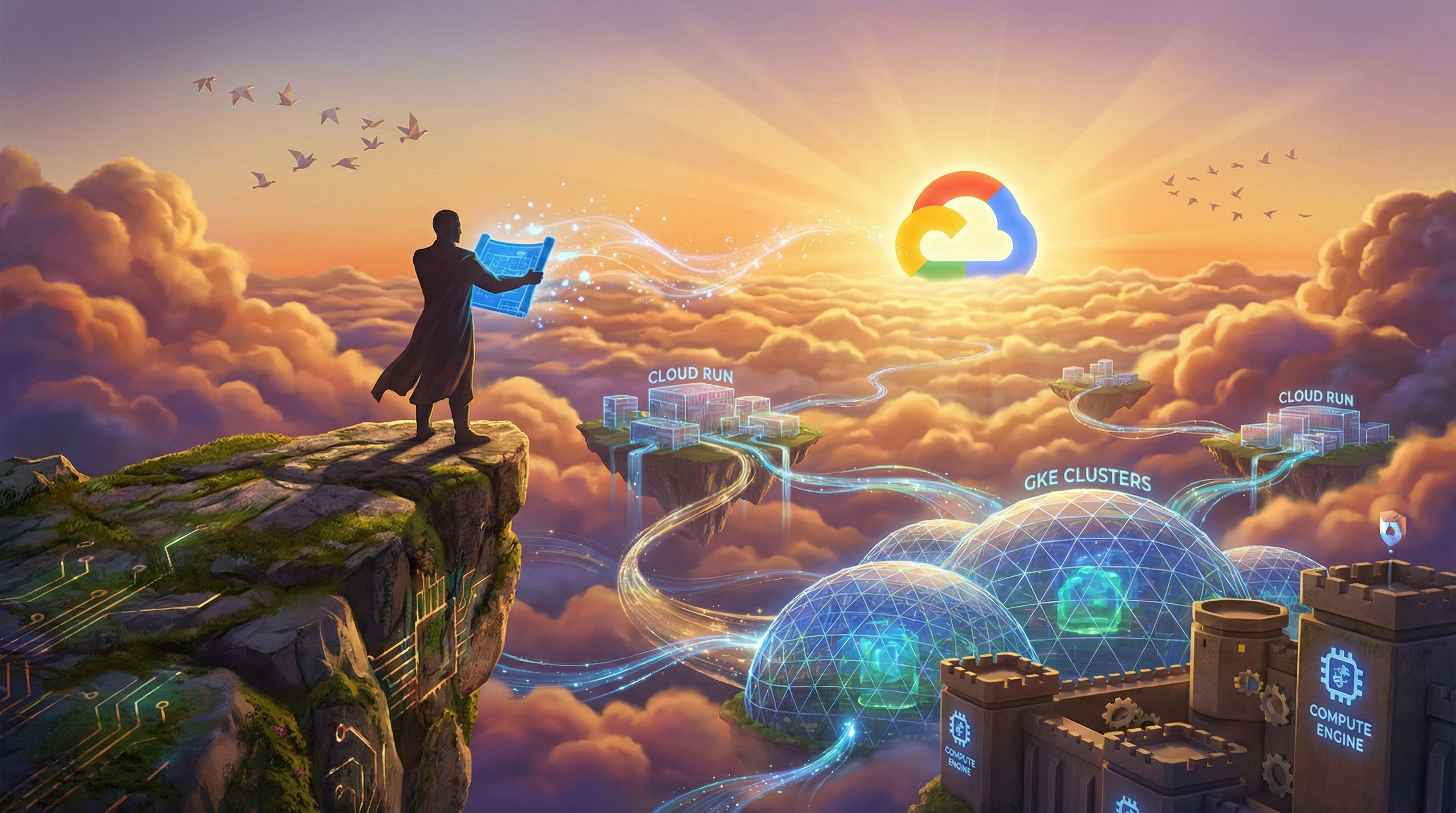
This is where the narrative becomes fascinating. The repository doesn't merely offer you a single choice. It presents you with three distinct approaches to container execution:
- Cloud Run 🎯 — Serverless containers, zero cluster administration
- GKE Microservices ☸️ — Complete Kubernetes control, maximum authority
- Compute Engine Auto Scaling ⚙️ — Conventional, reliable, steady-state operation
Consider this carefully: Which option would you select for a startup facing volatile traffic patterns? What about an enterprise with rigid compliance mandates?
Attempt this exercise: Map each option to a scenario where it excels brilliantly ✨. Now map it to a scenario where it would spell catastrophe 💥.
🛡️ The Security Renaissance
I must address Architecture #21: Security Architecture.
The traditional approach: Construct a fortress surrounded by a moat 🏰. If you're inside, you're automatically trusted.
The contemporary approach: Multi-layered defense, zero trust. 🔐
Every individual request. Every single instance.
[User/Device]
      ↓
[Cloud Identity] → IAM Check
      ↓
[Verified Session]
      ↓
[Service A] --(mTLS)--> [Service B]
Question: When did you last audit who possesses access to which resources within your GCP projects? 🔍
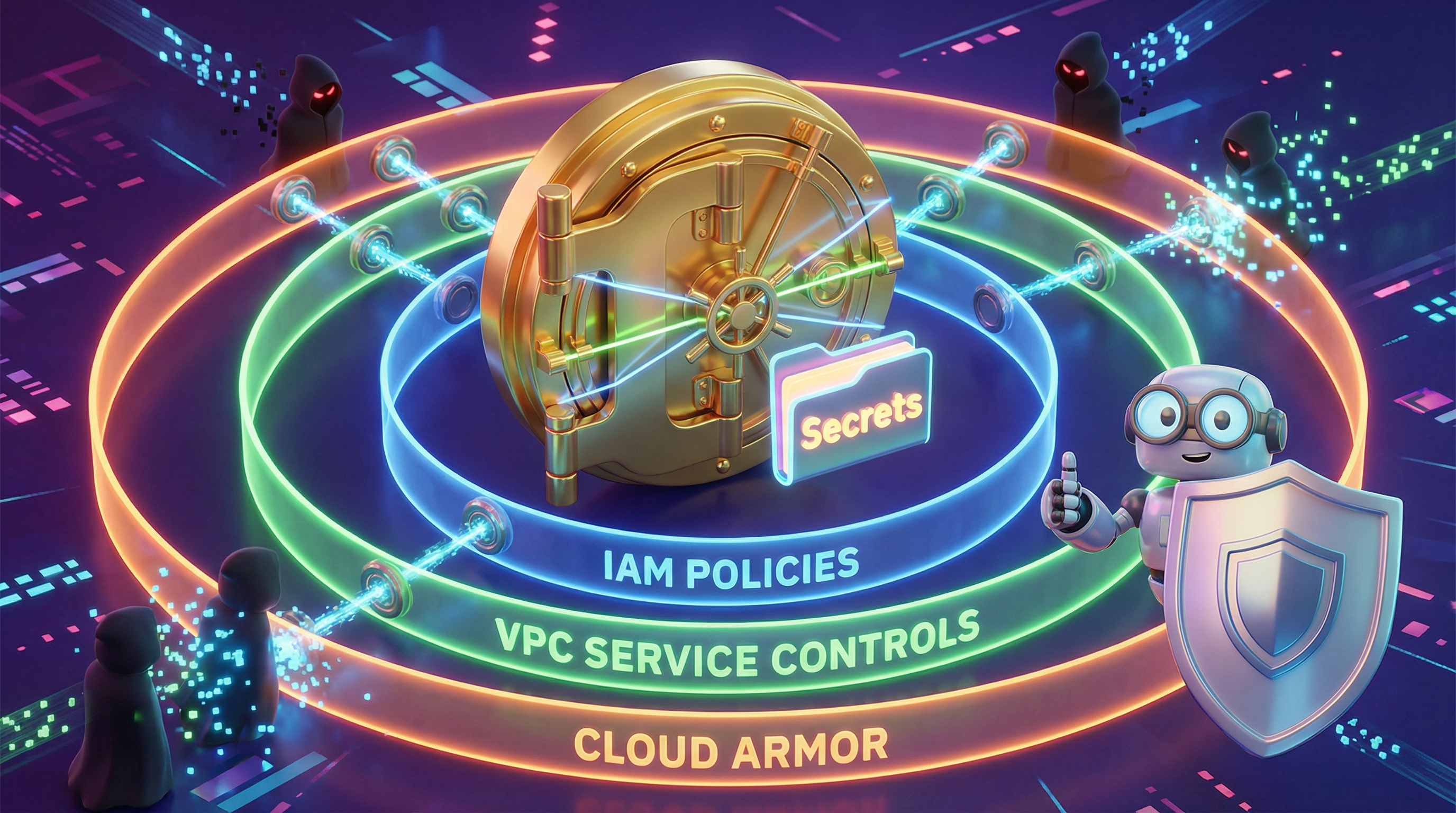
🔄 The Multi-Project Paradigm Shift
Here's a concept that consumed years of my life to fully grasp:
Single-project GCP deployments resemble residing in a house without walls. 🏚️
Architecture #10 demonstrates the proper project structure:
[Organization (Root)]
           ↓
    +-------+-------+-------+
    |       |       |       |
[Security][Shared][Workload A][Workload B]
Why does this carry such significance?
- Containment of damage (one compromised project doesn't collapse everything) 🚫
- Precise billing segregation 💰
- Distinct security boundaries per team 👥
Pause and reflect: How many GCP projects does your organization maintain? If it's merely one, you might want to reconsider your strategy. 🤔
🗄️ The Database Predicament
Choose your challenge:
| Architecture | Best For | Trade-off |
|---|---|---|
| Cloud SQL 🐘 | Traditional applications | Regional limitation only |
| Spanner 🌐 | Global consistency | Elevated expenses |
| BigQuery 📊 | Analytical processing | Non-transactional nature |
| Firestore 🔥 | Mobile/real-time applications | Query complexity |
Honest assessment: I've witnessed teams select the incorrect database and dedicate months to subsequent migration efforts. 😓
Question: What's the most significant database error you've committed or encountered? 🤷
🎯 The Industry Mapping That Transformed Everything
This represents the feature that compelled me to construct this repository instantaneously.
Every architecture is linked to industries featuring:
- Essential use cases 📋
- Recommended architectural patterns 📐
- Compliance prerequisites ✅
Illustration: Financial Services 💰
- PCI-DSS, SOX, GDPR compliance requirements
- Real-time transaction processing capabilities ⚡
- Fraud detection mechanisms 🛡️
- Multi-region active/active configurations for global availability 🌍
Illustration: Healthcare 🏥
- HIPAA, HITECH compliance standards
- Patient data protection protocols 🔒
- Zero trust architecture implementation
- Disaster recovery strategies ensuring patient safety 🚑
Consider this deeply: Which compliance challenges haunt your sleep? I've engineered patterns to address them. 😴
💎 The Terraform Motherlode
Here's the game-changer: Every architecture includes comprehensive Terraform code. 🛠️
Not merely code fragments. Complete, functional infrastructure as code implementations.
terraform/
├── 01-serverless-architecture/
│   ├── main.tf
│   ├── variables.tf
│   ├── outputs.tf
│   └── app/
│       └── main.py
├── 02-cloud-run-microservices/
├── 03-gke-microservices/
└── ... (21 total)
Experiment with this: Select one architecture and actually deploy it 🚀. Observe its operation. Modify it. Break it 💥. Learn from the experience.

📊 The Complexity Continuum
Not all architectures are created equal:
| Architecture | Complexity | When to Use |
|---|---|---|
| Static Website 🌐 | ⭐ | Marketing sites, documentation |
| Serverless ☁️ | ⭐⭐ | APIs, event-driven systems |
| Cloud Run 🎯 | ⭐⭐⭐ | Microservices architectures |
| GKE ☸️ | ⭐⭐⭐⭐ | Complex Kubernetes workloads |
| Multi-region Active/Active 🌍 | ⭐⭐⭐⭐⭐ | Mission-critical global applications |
Question: Are you over-engineering your solutions? Or under-engineering them? Be completely honest with yourself. 🤔
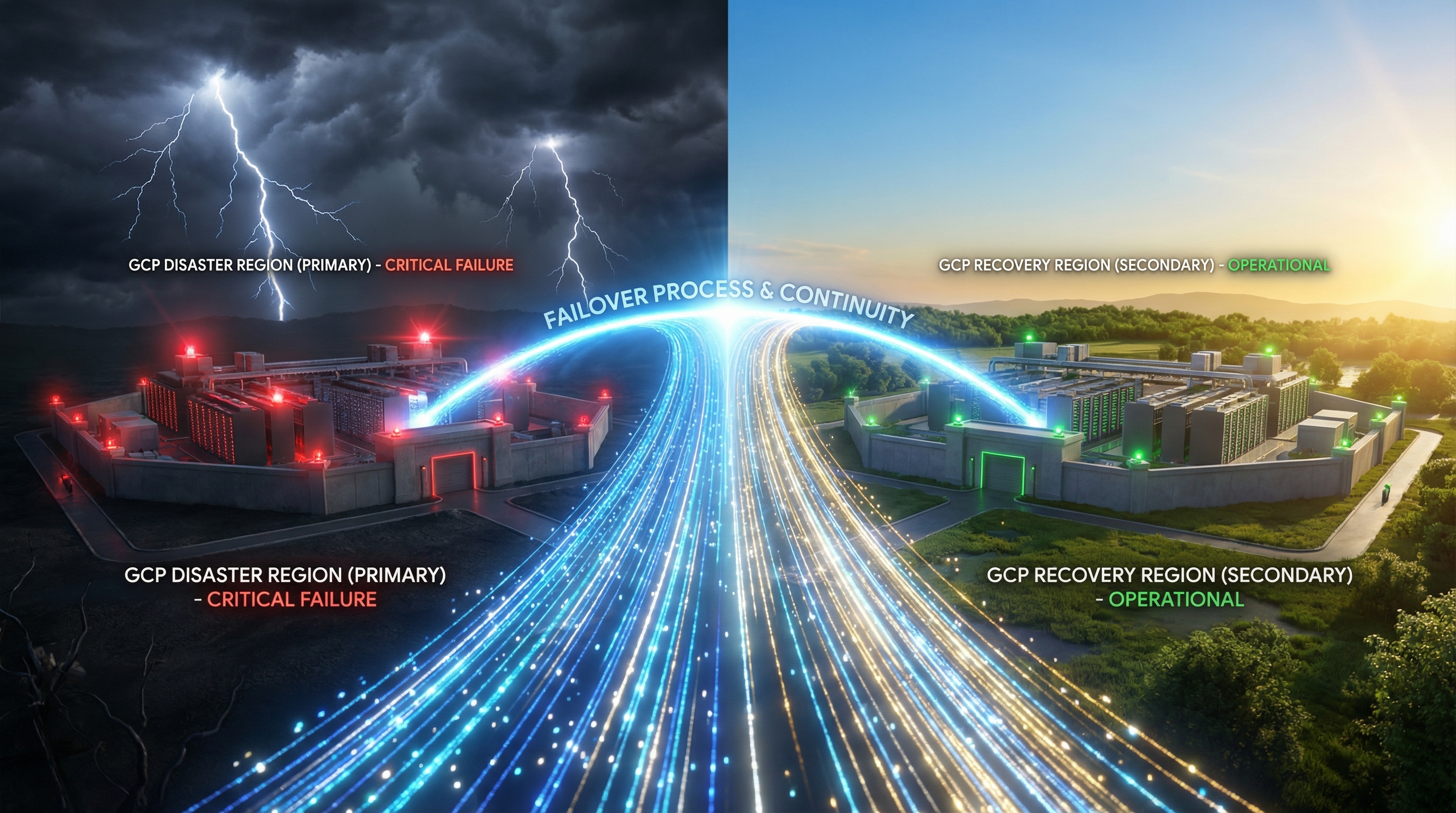
🚨 The Disaster Recovery Reality Check
Architecture #20: Disaster Recovery.
Here's the uncomfortable reality: Most organizations don't contemplate disaster recovery until catastrophe strikes. ⚠️
I've engineered architectures that demonstrate:
- Backup strategies and methodologies 💾
- Multi-region failover mechanisms 🔄
- RTO/RPO considerations and calculations ⏱️
- Testing procedures and validation protocols ✅
Pause and reflect: If your primary region experienced an outage this very moment, how much time would recovery require? Do you even possess this knowledge? 🤔
🌊 The Streaming Transformation
Architecture #14: Data Engineering Pipeline.
Real-time data processing has become the standard expectation. Clickstream analytics 📊. IoT telemetry streams 📡. Log aggregation systems 📝. Financial transaction processing 💸.
Dataflow enables this capability:
[Pub/Sub] → [Dataflow] → [BigQuery/Bigtable]
Question: Which real-time data opportunities are you missing due to the absence of a streaming architecture? 🤔
🤖 The Machine Learning Infrastructure
Architecture #16: AI/ML.
This extends far beyond model development. It encompasses the infrastructure necessary to:
- Train models at massive scale 🏋️
- Deliver predictions with minimal latency ⚡
- Monitor model performance metrics 📈
- Continuously retrain and improve models 🔄
Consider this carefully: Your ML model is only as effective as the infrastructure powering it.
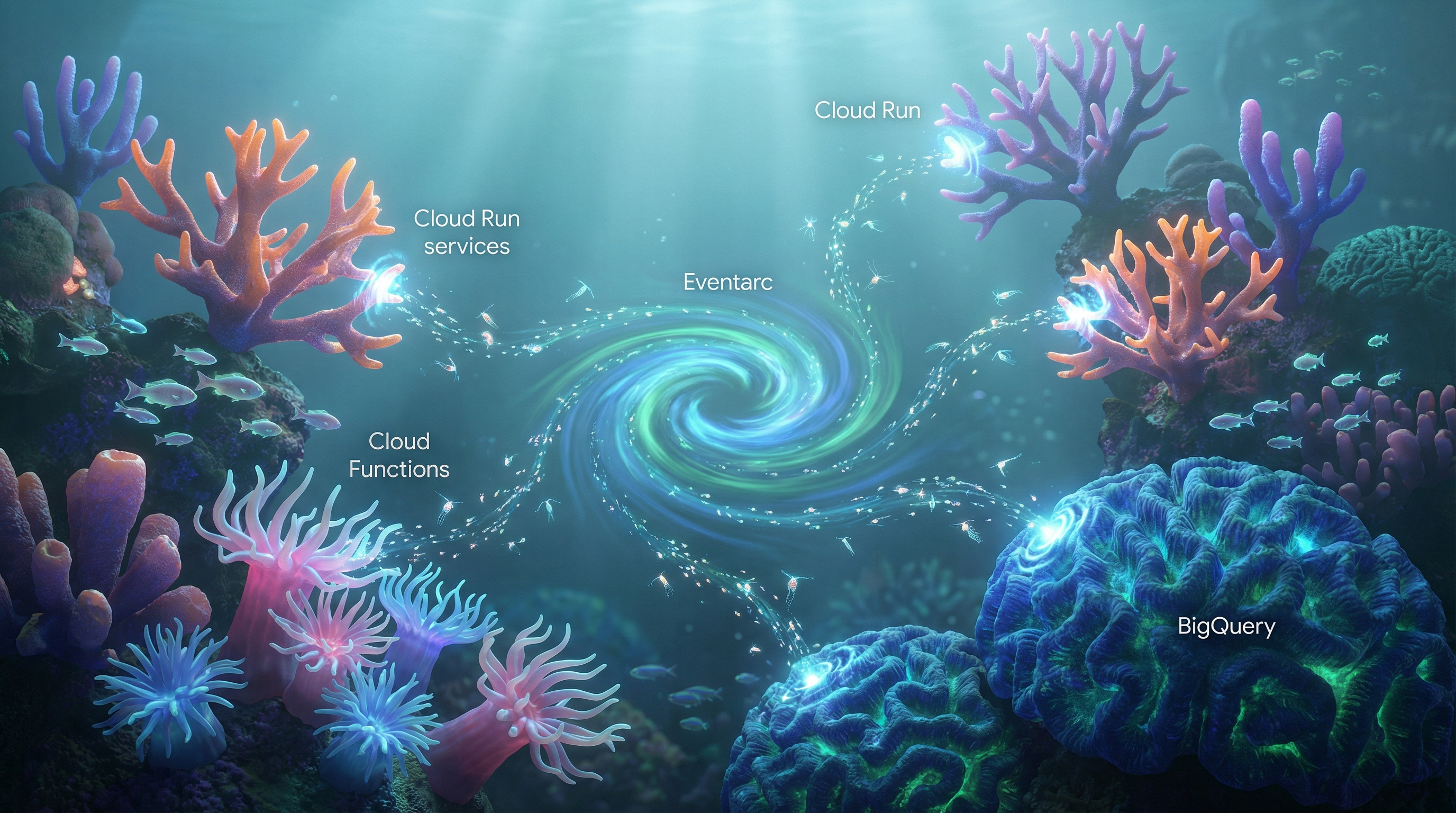
⚡ The Event-Driven Paradigm
Architecture #15: Event-Driven.
This represents how contemporary systems communicate:
[Service A] → [Eventarc] → [Service B]
                          → [Service C]
                          → [Service D]
Loose coupling. Asynchronous processing capabilities. Inherent scalability 📈.
Question: How many tightly coupled integrations are you maintaining that should transition to event-driven architecture? 🔗
📡 The IoT Proliferation
Architecture #17: IoT.
Intelligent homes 🏠. Industrial telemetry systems 🏭. Fleet management platforms 🚚. Connected devices emerging everywhere.
The pattern remains consistent:
[Devices] → [Cloud Run Gateway] → [Pub/Sub] → [Dataflow] → [Storage/ML]
Consider this possibility: What innovations could you construct if you possessed a reliable IoT infrastructure pattern ready for immediate deployment? 💡
🏝️ The Data Lake Foundation
Architecture #13: Data Lake.
All your organizational data. Unified location. Queryable interface.
- Raw data streams arrive here 🌊
- Undergoes transformation processes 🔄
- Becomes analytics-ready 📊
- Fuels machine learning models 🤖
Question: How much time do your data scientists dedicate solely to accessing data? ⏱️
🌐 The Shared VPC Revolution
Architecture #08: Shared VPC.
If you manage more than 10 projects, this becomes essential.
     [Host Project]
           |
     +------+------+------+
     |      |      |      |
[Proj A][Proj B][Proj C][Proj D]
The traditional approach: VPC peering mesh (exponential complexity) 🕸️.
The modern approach: Hub-and-spoke topology (linear complexity) 🎯.
Pause and reflect: How many VPCs do you maintain? How are they interconnected? 🔗
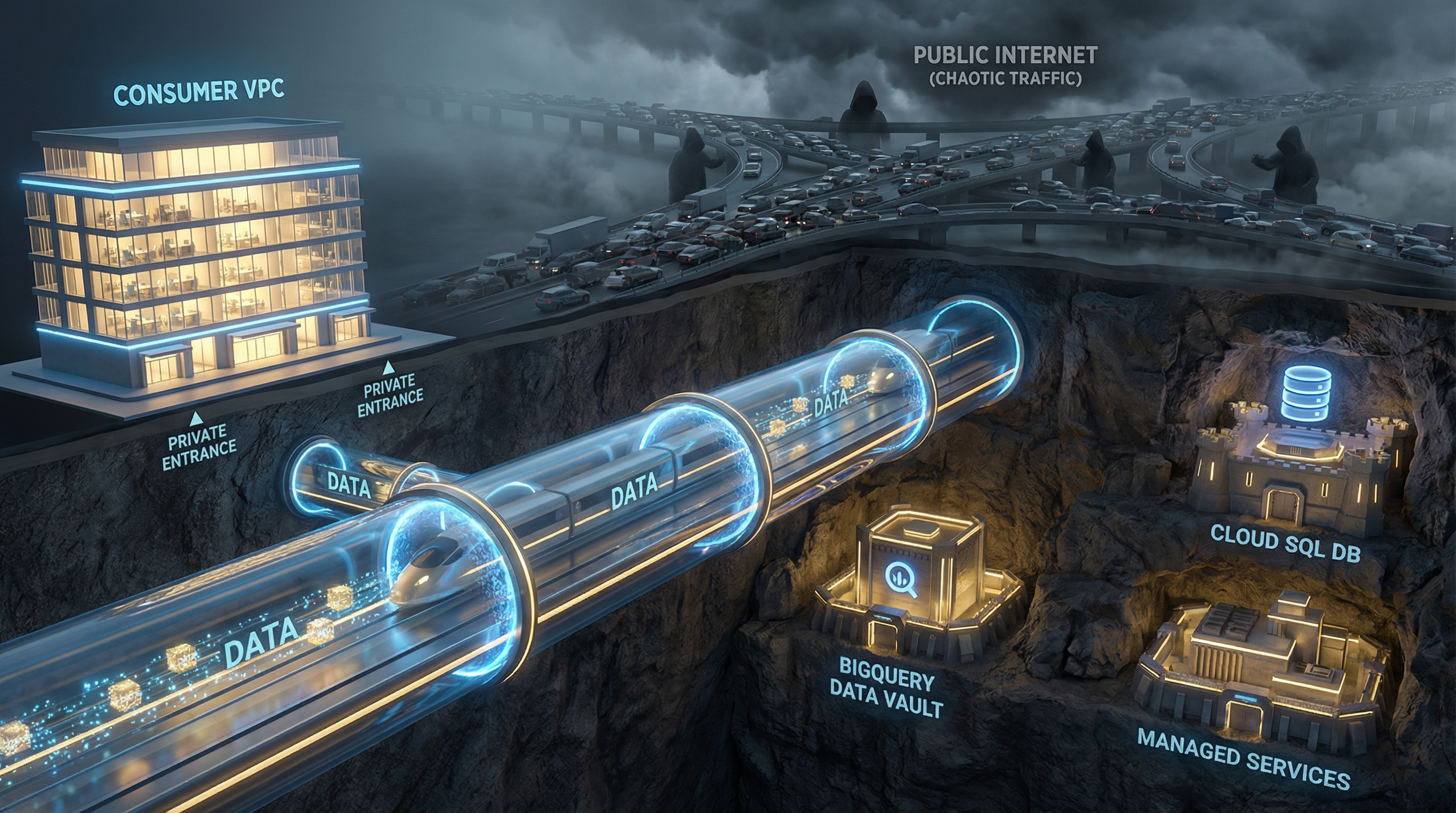
🔐 The Private Service Connect Decision
Architecture #09: Private Service Connect.
When internet connectivity proves insufficient:
- Consistent performance characteristics ⚡
- Private, secure connection pathways 🔒
- Elimination of VPC peering requirements 🚫
Question: Are you exposing services publicly that should remain private? 🤔
⚖️ The Load Balancer Dominance
Architecture #05: Global Load Balancer.
Single Anycast IP address. Global accessibility. Minimal latency.
         [Anycast IP]
              |
        [Global Forwarding Rule]
              |
          [URL Map]
         /    |    \
    [US-West][Europe][Asia]
Question: Are you managing multiple load balancers when a single global load balancer would suffice? 🤔
🔑 The Identity Cornerstone
Architecture #11: Identity.
Centralized authentication mechanisms. Single sign-on capabilities. Least privilege principles.
[On-Prem AD] → [Cloud Identity] → [GCP Resources]
Honest assessment: Identity represents the new security perimeter. Mishandle this, and nothing else carries significance. 🛡️
🏛️ The Security Command Center
Architecture #21: Security Architecture.
Compliance monitoring systems. Threat detection mechanisms. Audit trail capabilities.
Every regulated industry requires this foundation.
Question: When did you last review your Cloud Audit Logs? 📋
🌍 The Global Database Revolution
Architecture #18: Spanner.
Authentic global consistency. Zero compromises required.
[US-East] ←→ [Europe-West] ←→ [Asia-East]
   ↓            ↓              ↓
[Same Data]  [Same Data]    [Same Data]
Consider this possibility: What innovations could you construct if your database achieved true global reach? 💡

💡 Insights Gained from Creating 21 Architectures
After constructing all of them, these lessons endured:
- Commence simply. VPC + Identity as the foundation. 🏗️
- Security remains non-negotiable. Zero trust implementation from day one. 🛡️
- Compliance simplifies when designed proactively. ✅
- Multi-project structures benefit organizations of all sizes. 🏢
- Disaster recovery constitutes an absolute requirement. 🚨
- Serverless doesn't represent the universal solution. ☁️
- Containers don't represent the universal solution. 📦
- Perfect architectures don't exist. Only trade-offs. ⚖️
🎯 Your Moment to Act
I present three challenges for you:
-
Select one architecture I've engineered that you've never previously utilized. Deploy it 🚀. Experiment with it. Master it 🏆.
-
Map your existing infrastructure against the patterns I've constructed. What elements are you missing? Where are you over-engineering? 🗺️
-
Share your journey. Which architecture resonated with you? Which one created confusion? What insights did you gain? 💬
🏆 The Ultimate Verdict
I've crafted more than mere documentation. This represents a shortcut to wisdom that typically requires years to accumulate.
21 architectural blueprints. 10 industry specializations. Complete Terraform implementations.
I've engineered the patterns. I've authored the code. The only remaining element is you. 👤
What will you construct? 🏗️
P.S. If you found this valuable, preserve it for future reference 📚. Share it with your team 👥. And most significantly — actually implement one of the architectures I've created. Reading about cloud architecture represents the easy path. Building it constitutes where genuine learning occurs 🎓.
📌 Connect & Support
🐙 GitHub Repository: View Source Code — All 21 architectures with complete Terraform code
📧 Email: connect@jaydeepgohel.com — Let's connect and discuss cloud architecture
☕ Buy Me a Coffee: If you found this work valuable and want to support more content like this, buy me a coffee ☕
🤖 This article was written with a little help from AI.
💬 Feedback: Share your thoughts in the comments below — What did you love? What can be improved? Your feedback helps me create better content! 👇


Comments
Post a Comment