Agentic AI Architectures That Will Define Enterprise AI in Feature
Gartner reports a staggering 1,445% surge in multi-agent system inquiries from Q1 2024 to Q1 2026. The era of simple prompts and single-model deployments is dead. Welcome to the age of agentic, multi-cloud AI - where autonomous teams of AI agents collaborate across AWS, Azure, and GCP to solve problems no single system could touch.
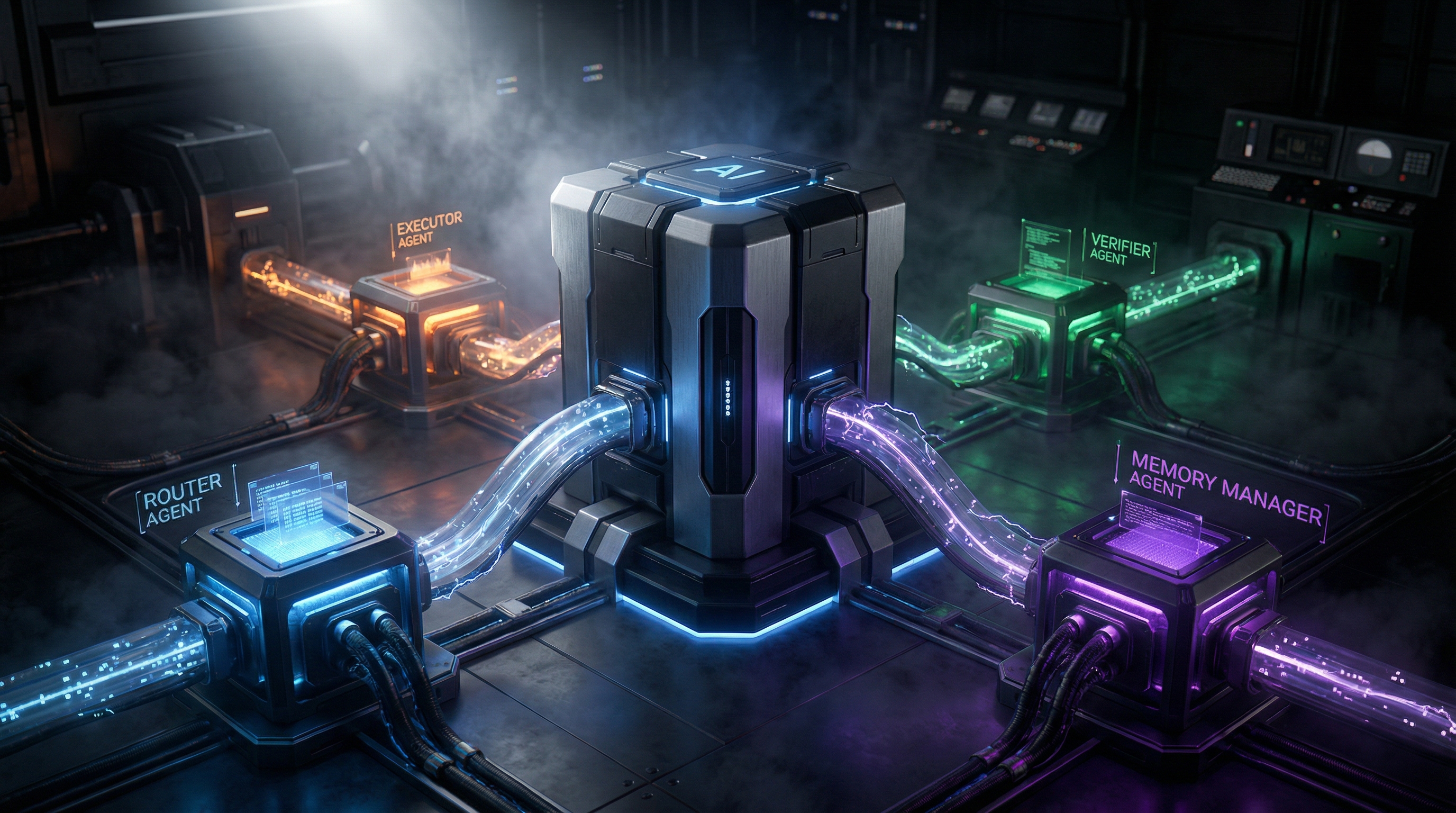
The Problem
Your AI strategy is already outdated.
Most enterprises are stuck building isolated ChatGPT wrappers or deploying single-model applications that live entirely on one cloud provider. They're missing out on the forest for the trees — focusing on individual models instead of building autonomous systems that can:
- Plan and execute complex workflows without human intervention
- Use tools and APIs to interact with external systems
- Collaborate in multi-agent swarms for distributed problem-solving
- Learn and adapt from real-world feedback loops
- Enforce safety through guardrails and compliance agents
The result? Pilots that never scale, prototypes that fail in production, and AI initiatives that cost more than they deliver.
⚡ Pro Insight
Gartner predicts that by near Feature, more then ~40% of enterprise applications will include task-specific AI agents. The competitive advantage shifts from "having models" to "running an agent operating system."
Why This Matters
The convergence of agentic AI and multi-cloud infrastructure represents a paradigm shift that redefines what's possible:
- Vendor independence: Avoid lock-in and leverage best-of-breed services across AWS, Azure, and GCP
- Resilience: Multi-region, multi-cloud disaster recovery with RTO <3 minutes
- Cost optimization: Route workloads to the most cost-effective cloud (28% average savings with FinOps)
- Compliance: Meet data residency and regulatory requirements automatically
- Performance: Reduce latency through geographic distribution
- Innovation: Access cutting-edge AI models (Bedrock, Azure OpenAI, Vertex AI) without commitment
This isn't hype - it's the future of enterprise AI. And it's already happening.
Deep Dive
What Is Agentic AI?
Agentic AI represents a fundamental shift from stateless, prompt-driven models to goal-directed systems capable of autonomous decision-making. Unlike traditional chatbots that wait for user input, agentic systems:
- Understand context through persistent memory layers
- Plan multi-step workflows using specialized agents
- Execute by calling tools, APIs, and cloud services
- Verify outputs using critic and safety agents
- Learn from feedback through continuous loops
Think of it less like a chatbot and more like an AI employee — complete with role-based permissions, tool access, oversight, and the ability to work autonomously within defined boundaries.
Why Multi-Cloud?
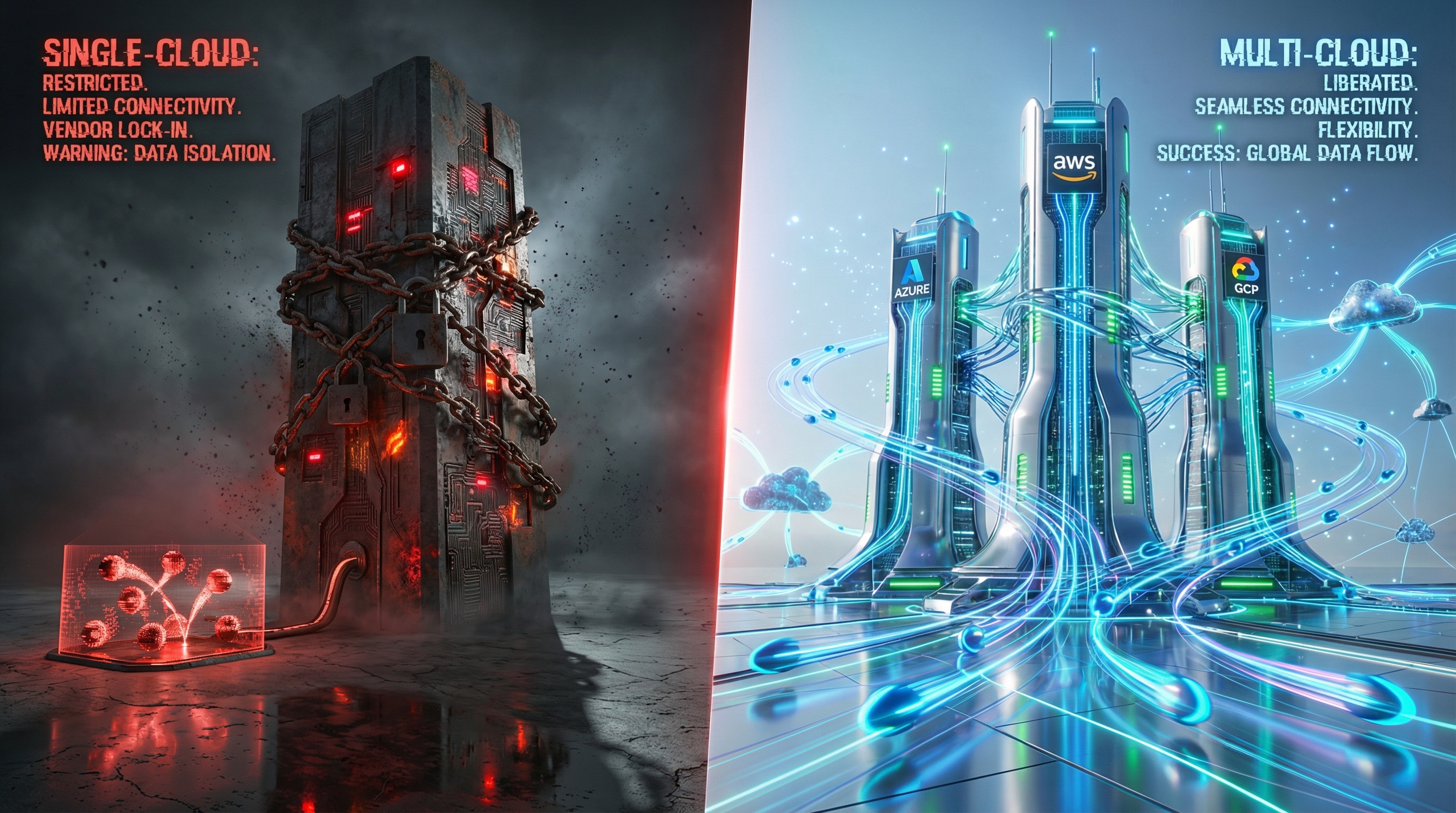
Single-cloud strategies create vendor lock-in that becomes increasingly dangerous as AI becomes mission-critical. Multi-cloud architectures provide:
| Capability | Single Cloud | Multi-Cloud |
|---|---|---|
| Resilience | Single point of failure | Cross-cloud redundancy |
| Cost Control | Take-it-or-leave-it pricing | Spot pricing arbitrage |
| Innovation | Limited to one provider | Access to multiple ecosystems |
| Compliance | One region set | Global data residency |
| Negotiation | No leverage | Competitive bidding |
The 21 Architecture Revolution
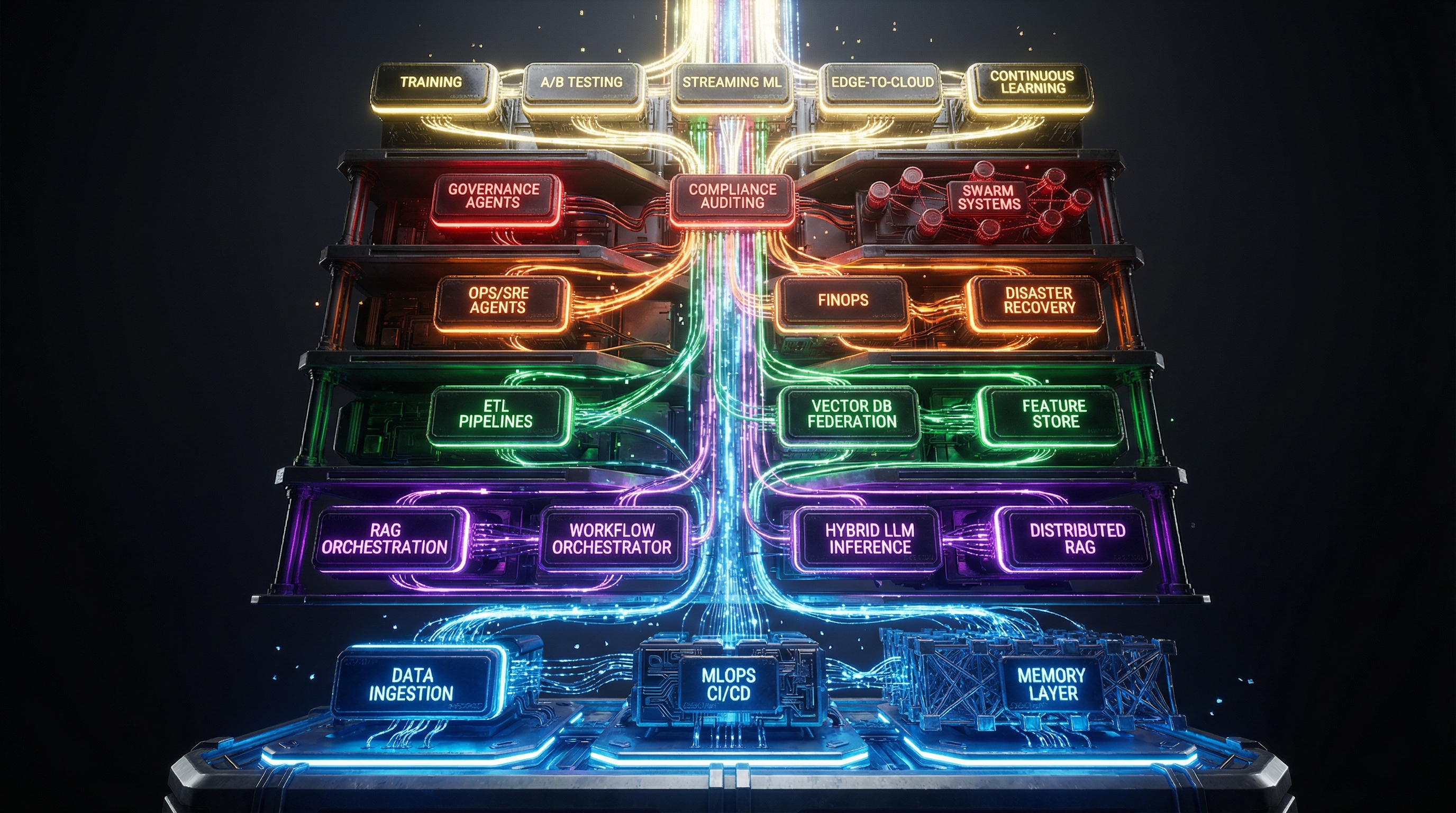
Here's what makes this architecture library truly mind-blowing: It doesn't just list patterns — it maps 21 distinct but interconnected architectures to real industry use cases, compliance requirements, and implementation paths.
From Cross-Cloud RAG Orchestration to Continuous Learning & Model Evolution Agents, each architecture is designed to be:
- Cloud-agnostic: Works across AWS, Azure, and GCP
- Production-ready: Built for enterprise scale and resilience
- Compliance-aware: HIPAA, PCI-DSS, GDPR, FedRAMP built in
- Observability-first: Full tracing, logging, and monitoring
- Self-healing: Autonomous operations and SRE agents
Inside the Project
This isn't just a documentation set — it's a complete blueprint for the next generation of enterprise AI. Let me walk you through what makes it special.
Architecture Breakdown
The library covers the full spectrum of agentic, multi-cloud needs:
Foundation Layer
- [03] Agentic Data Ingestion & Labeling: Automated data validation and labeling across clouds
- [05] Agentic MLOps CI/CD: Reduce deployment time from weeks to hours
- [09] Multi-Cloud Memory & Knowledge Layer: Unified agent memory and context management
Intelligence Layer
- [01] Cross-Cloud RAG Orchestration: Multi-cloud knowledge retrieval and document Q&A
- [02] Multi-Agent Workflow Orchestrator: Complex task decomposition and execution
- [07] Agentic Hybrid LLM Inference: Multi-provider LLM routing with fallback and caching
- [08] Agentic Distributed RAG: Federated knowledge search across multiple knowledge bases
Data Layer
- [04] Cross-Cloud Agentic ETL Pipelines: Multi-cloud data transformation pipelines
- [10] Agentic Vector Database Federation: Cross-cloud vector search with federation
- [11] Agentic Feature Store Across Clouds: Centralized feature management
Operations Layer
- [12] Autonomous Ops/SRE Agents: Self-healing infrastructure with automatic remediation
- [15] FinOps & Cost Optimization Agents: Real-time cost monitoring and optimization
- [19] Disaster Recovery & Failover Agents: Automated DR orchestration with RTO <3 minutes
Governance Layer
- [13] Governance, Guardrails & Safety Agents: Automated compliance and content safety
- [14] Compliance Auditing Agents: Regulatory compliance automation
- [16] Multi-Agent Swarm Systems: Massive parallel agent processing
Advanced Layer
- [06] Agentic Model Training Orchestration: Distributed training across clouds
- [15] Agentic A/B Testing & Experimentation: Autonomous experiment design and analysis
- [17] Real-Time Streaming ML Agents: Low-latency event processing
- [18] Edge-to-Cloud Agentic ML: Edge device orchestration and hybrid AI
- [20] Continuous Learning & Model Evolution Agents: Automated retraining and drift detection
- [21] Disaster Recovery & Failover Agents: Business continuity and resilience
Industry Mapping: Where the Magic Happens
What's truly revolutionary is how these 21 architectures map to real industry needs with compliance requirements baked in:
Financial Services
Use Cases: Real-time fraud detection, credit risk scoring, algorithmic trading, customer service, anti-money laundering
Key Architectures: Streaming ML (real-time fraud), Hybrid LLM Inference (transaction analysis), Continuous Learning (fraud pattern evolution), Governance & Safety (compliance), Feature Store (transaction features), MLOps CI/CD (rapid model updates)
Compliance: PCI-DSS, SOX, FCRA, SR 11-7 (explainability), GDPR, Basel III
Healthcare & Life Sciences
Use Cases: Medical imaging diagnostics, patient risk prediction, drug discovery, clinical documentation, genomic analysis
Key Architectures: Cross-Cloud RAG (medical literature), Model Training (large datasets), Data Ingestion & Labeling (medical images), Governance & Safety (HIPAA compliance), Edge-to-Cloud (medical devices), Continuous Learning (model updates)
Compliance: HIPAA, GDPR, GxP, HiTRUST, FDA 21 CFR Part 11
Retail & E-Commerce
Use Cases: Personalized recommendations, demand forecasting, visual search, dynamic pricing, inventory optimization
Key Architectures: Hybrid LLM Inference (personalization), Feature Store (user/item features), A/B Testing (recommendation variants), Streaming ML (real-time personalization), FinOps (cost control)
Compliance: GDPR, CCPA, PCI-DSS, CPRA, Cookie Laws
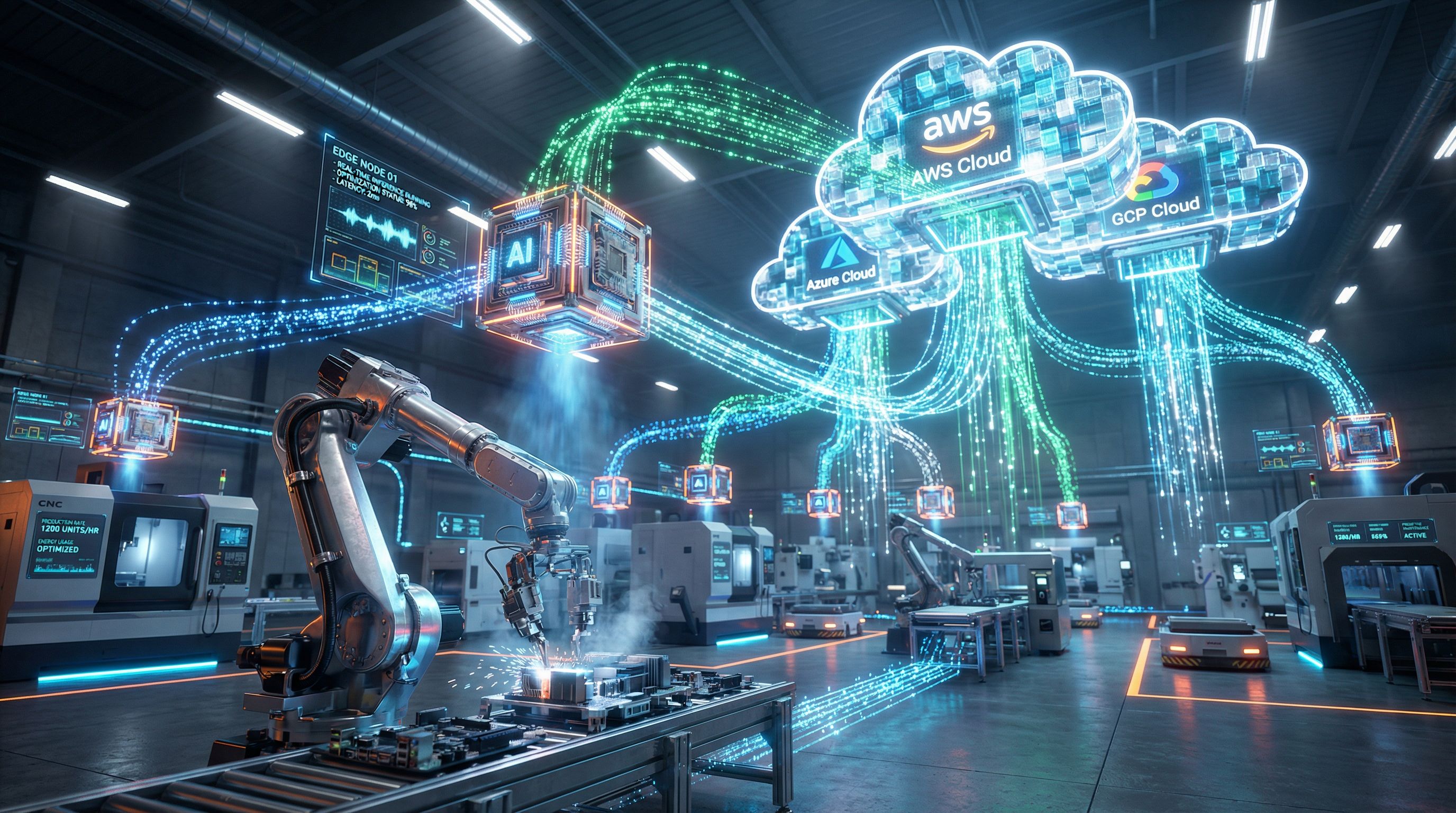
Manufacturing & Energy
Use Cases: Predictive maintenance, quality control, digital twins, autonomous systems, energy optimization
Key Architectures: Streaming ML (sensor data), Edge-to-Cloud (factory floor), Autonomous Ops/SRE (self-healing), Continuous Learning (equipment patterns), Data Ingestion (IoT sensors)
Compliance: ISO 27001, IEC 62443, Safety Standards, NERC CIP, ISO 9001
Hidden Insights Developers Miss
Here are the gems most engineers overlook:
1. Governance First, Not Later
[13] Governance, Guardrails & Safety Agents isn't an add-on — it's foundational. In regulated industries, you can't just "bolt on" compliance later. Start with safety guards, PII detection, and audit trails from day one.
2. Models Rot Faster Than You Think
[20] Continuous Learning & Model Evolution Agents addresses the silent killer of production AI: model drift. Fraud patterns change, customer behavior shifts, equipment wears down. Your model won't silently degrade if you've built drift detection and automated retraining into your architecture.
3. Edge Computing Isn't Optional
For manufacturing, autonomous vehicles, and IoT scenarios, [19] Edge-to-Cloud Agentic ML isn't a nice-to-have — it's mandatory. Real-time decisions can't wait for round trips to data centers 1,000 kilometers away.
⚡ Pro Insight
Edge AI reduces latency to under 5 milliseconds. Manufacturers achieve ROI within 12 months through improved uptime and data security.
4. Multi-Agent Swarms Scale Where Single Agents Fail
[16] Multi-Agent Swarm Systems enables massive parallel processing that would overwhelm single-agent architectures. Think fraud detection across millions of transactions, or content moderation at TikTok scale.
5. FinOps Pays for the Whole Architecture
[15] FinOps & Cost Optimization Agents typically delivers 28% savings on multi-cloud AI workloads. That's often enough to fund the entire architecture initiative. Stop treating cost management as an afterthought.
6. A/B Testing Drives Business Value
[14] Agentic A/B Testing & Experimentation ensures you're not just deploying AI — you're measuring its impact. Measure before you scale. Always.
Key Takeaways
- By this year multi-agent systems — Gartner predicts ~40% of enterprise apps will include task-specific agents
- Agentic + Multi-Cloud = Unfair Advantage — Combine autonomous agents with cloud-agnostic infrastructure for resilience, cost optimization, and innovation
- Start with foundations — Implement MLOps CI/CD and Data Ingestion before adding advanced patterns
- Compliance is non-negotiable — Build governance and safety from day one in regulated industries
- Models drift continuously — Continuous learning and drift detection aren't optional
- Edge computing is mandatory — Real-time decisions require local inference
- Swarm systems scale — Multi-agent architectures handle massive parallelism where single agents fail
- Measure everything — A/B testing drives real business value
Final Thoughts
The 21 architectures in this library represent more than patterns — they're a blueprint for the future of enterprise AI. Organizations that master agentic, multi-cloud systems will outpace competitors stuck in single-cloud, single-model approaches.

The question isn't whether to adopt agentic, multi-cloud AI — it's whether you'll be leading or following.
Your move.
💡 Want to dive deeper? The complete architecture library includes detailed diagrams, implementation guides, and industry mappings for all 21 patterns. Start with [13] Governance & Safety if you're in a regulated industry, or [05] MLOps CI/CD if you're looking to speed up deployment.
📌 Connect & Support
🐙 GitHub Repository: View Source Code + Terraform Templates
📧 Email: connect@jaydeepgohel.com — Let's connect and discuss cloud architecture
☕ Buy Me a Coffee: If you found this work valuable and want to support more content like this, buy me a coffee ☕
🤖 Crafted with a touch of AI assistance
💬 Feedback: Share your thoughts in the comments below — What did you love? What can be improved? Your feedback helps me create better content! 👇


Comments
Post a Comment